SECRET SITE
Dissect the compare-contrast expectations within the standards
View a series of whole-class lessons.
Grades K-1
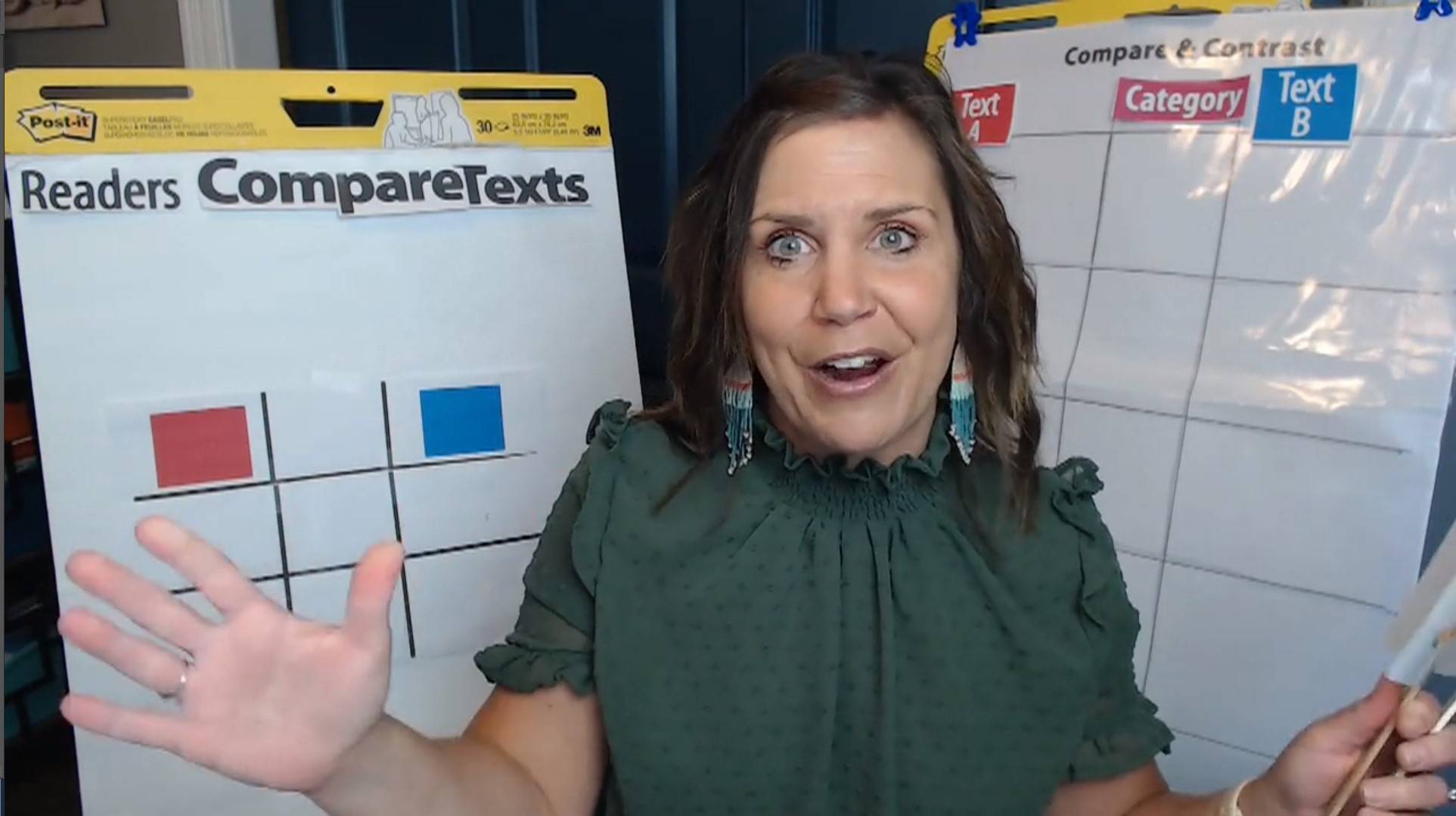
Lesson 1: Compare text details across the rows of a T-Chart
Vimeo | YouTube
Lesson 2: Compare literature using story elements
Vimeo | YouTube
Lesson 3: Explain comparative thinking in writing— Literature
Vimeo | YouTube
Lesson 4: Infer categories of comparison for nonfiction texts/topics
Vimeo | YouTube
Lesson 5: Explain comparative thinking in writing— Informational Text
Vimeo | YouTube
Grades 2-3
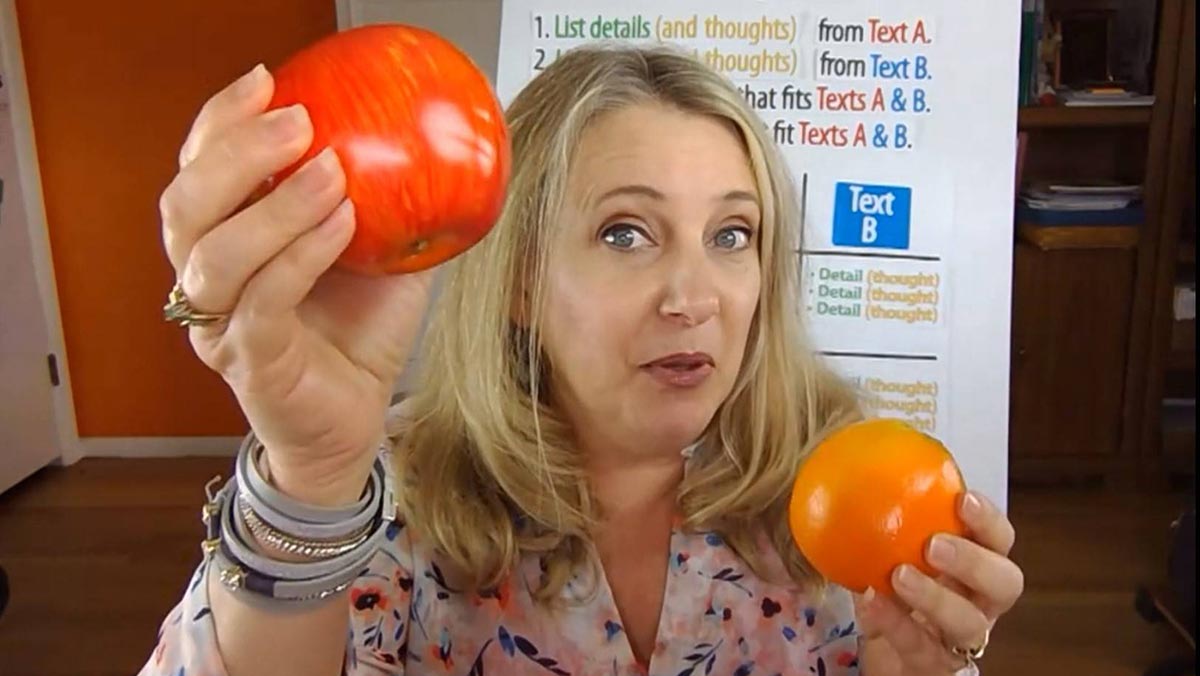
Lesson 1: Compare text details across the rows of a T-Chart
Vimeo | YouTube
Lesson 2: Compare literature using story elements
Vimeo | YouTube
Lesson 3: Explain comparative thinking in writing— Literature
Vimeo | YouTube
Lesson 4: Infer categories of comparison for nonfiction texts/topics
Vimeo | YouTube
Lesson 5: Explain comparative thinking in writing— Informational Text
Vimeo | YouTube
Grades 4-6
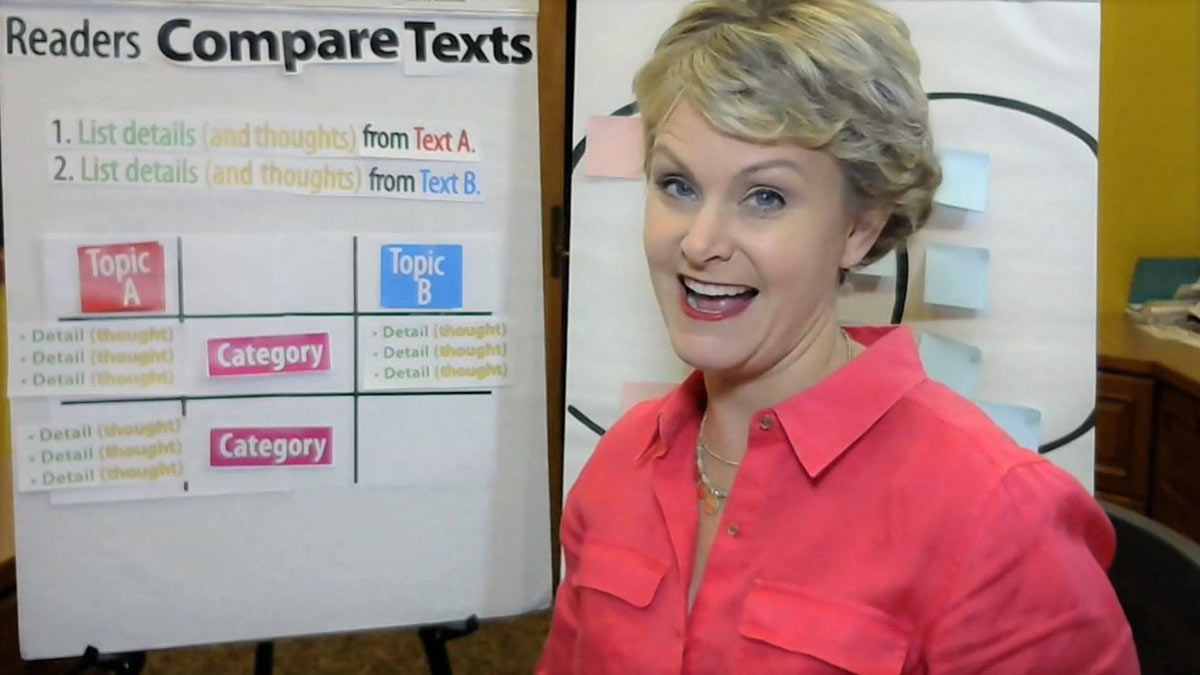
Lesson 1: Compare text details across the rows of a T-Chart
Vimeo | YouTube
Lesson 2: Compare literature using story elements
Vimeo | YouTube
Lesson 3: Explain comparative thinking in writing— Literature
Vimeo | YouTube
Lesson 4: Infer categories of comparison for nonfiction texts/topics
Vimeo | YouTube
Lesson 5: Explain comparative thinking in writing— Informational Text
Vimeo | YouTube
Grades 7-12
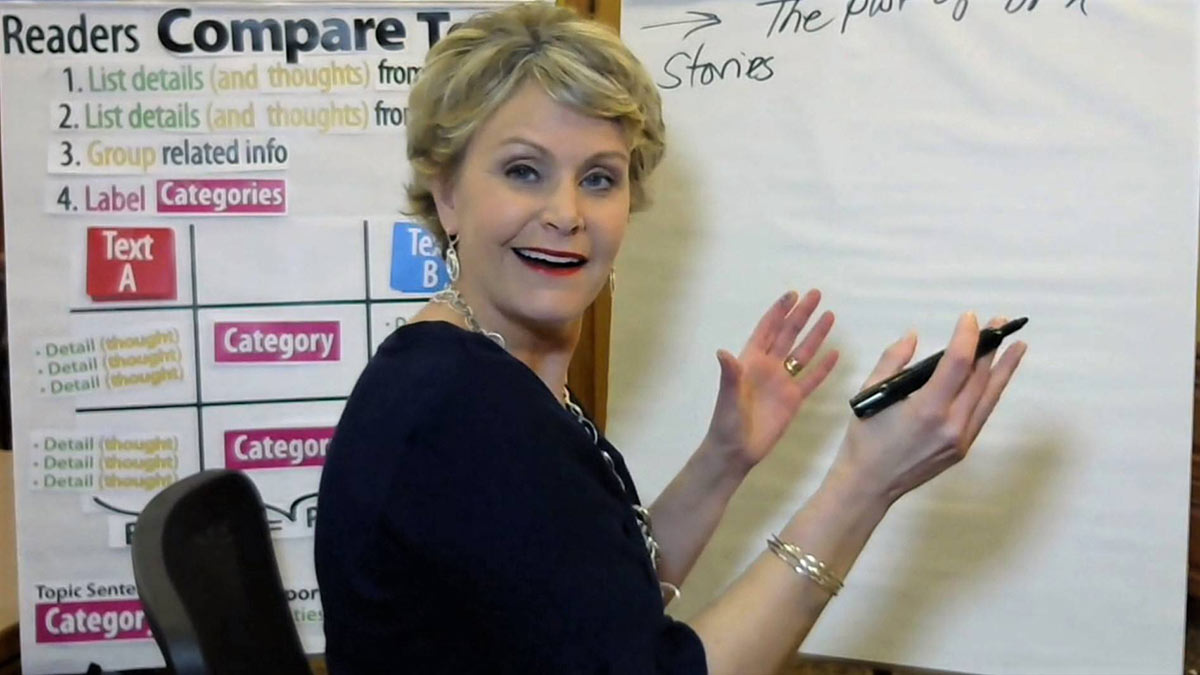
Lesson 1: Compare text details across the rows of a T-Chart
Vimeo | YouTube
Lesson 2: Compare literature using story elements
Vimeo | YouTube
Lesson 3: Explain comparative thinking in writing— Literature
Vimeo | YouTube
Lesson 4: Infer categories of comparison for nonfiction texts/topics
Vimeo | YouTube
Lesson 5: Explain comparative thinking in writing— Informational Text
Vimeo | YouTube
Recognize common categories for comparative thinking.


Compare story elements in literature


Focus on similarities—not differences.


Utilize the T-Chart as a prewrite.
Identify texts to compare for different purposes
Compare different viewpoints.


Compare different cultures.
Make connections between cultural versions and stories with different perspectives.


Voices in the Park presents four character perspectives.

Compare informational texts.